
Verify first. Travel with a clear plan.
Choose a private driver through evidence, direct questions and a written backup plan.
This practical guide shows solo women how to check identity, tourism credentials, reviews, vehicle details, communication and pickup arrangements before a Sri Lanka road trip.
- Driver identity checks
- Written trip boundaries
- Daylight-first routing
Travelling alone in Sri Lanka can be liberating. You can spend longer at a tea estate, change a beach day when the weather turns and build the route around your own interests. Yet a solo journey also means that every transport decision belongs to one person. When the trip crosses several regions, a private driver may reduce repeated taxi searches, late platform arrivals and the need to explain the same itinerary to a new person each day.
The important question is not whether a private driver makes a journey automatically safe. No transport choice can guarantee that. The useful question is whether a specific provider, assigned driver, vehicle and operating plan can be checked before travel—and whether you retain practical ways to change course if anything feels wrong.
What a private driver can—and cannot—solve
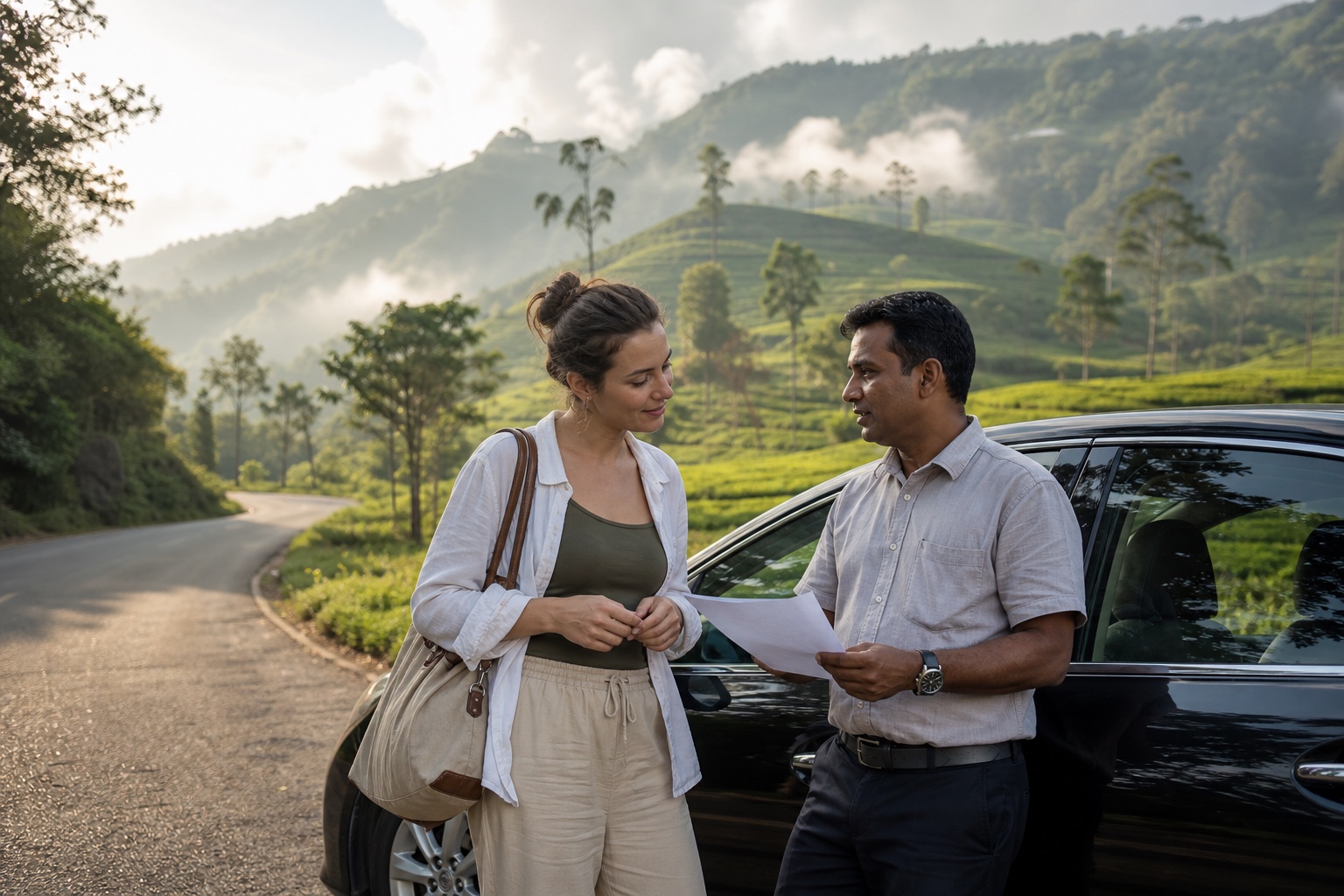
A retained vehicle is most useful when your route includes several hotels, luggage, early safari or train connections, or areas where app-based taxis are less available. It can also help you avoid standing alone with bags while negotiating transport after dark.
It may be unnecessary for a short stay in central Colombo, a week at one beach hotel or a simple airport transfer. In those cases, a reputable hotel transfer or a well-reviewed ride booked through a traceable channel may be enough. Choose the level of service from the actual route rather than from the idea that the most expensive option must be the safest.
Use a three-layer verification model
| Layer | What to request | What you are testing |
|---|---|---|
| The business | Legal or trading name, stable contact details, written terms, recent independent reviews and a backup contact. | Whether someone remains accountable if the assigned driver or vehicle changes. |
| The assigned driver | Full name, current photograph, phone number and tourism registration or guide credentials where relevant. | Whether the person arriving can be matched to the person approved before payment. |
| The actual trip | Dates, hotels, pickup points, route, road hours, stops, vehicle, inclusions, changes and emergency procedure. | Whether the service you receive is the service you evaluated. |
Do not let one strong layer hide a weak one. A polished website does not verify the individual who will arrive. A friendly driver does not replace clear payment and cancellation terms. A valid credential does not prove that an exhausting or late-night itinerary is sensible.
Sri Lanka Tourism Development Authority maintains registration processes for Tourist Drivers and tourist guides. Ask what type of credential the assigned person holds and request enough information to check it. If you want historical or cultural interpretation rather than transport alone, clarify whether a licensed Chauffeur Tourist Guide or another qualified guide is required.
Screen the first conversation before discussing price
Send the same short itinerary to each provider and compare the quality of the reply. A professional response should repeat the dates and route accurately, identify any unrealistic day, ask about luggage and fixed bookings, and explain the next step. It should not pressure you to transfer a deposit before the core details are known.
Ask practical questions that cannot be answered well with a copied sales message: “Which day looks too long?”, “Who will meet me at the airport?”, “How will I recognise the driver?”, “Who do I contact if the driver is unavailable?”, “What happens if I want to return to the hotel early?” and “Can you send the assigned driver’s details before arrival?”
Notice how boundaries are received. You should be able to state that you prefer daylight arrivals, do not want unscheduled shop visits, want hotel-door drop-off and will make your own decisions about restaurants and activities. A defensive, dismissive or overly personal reply is useful information before money changes hands.
Read reviews for patterns, not reassurance
Start with recent reviews on an independent platform, then compare them with testimonials on the provider’s own site. Look for details that resemble your trip: solo women, airport pickup, multi-day travel, route changes, long drives and what happened when a problem occurred.
Repeated observations are more meaningful than a single glowing paragraph. Useful reviews mention punctuality, communication, vehicle condition, safe driving, respect for personal space, transparent costs and a provider’s response when plans changed. Treat reviews with generic wording, no trip detail or an unusual burst of similar dates as weaker evidence.
Search the provider and driver’s name together with terms such as “review,” “complaint” and “Sri Lanka.” Confirm that the phone number or business identity used for payment matches the one described publicly. Screenshots can be edited; open the original review page whenever possible.
Put boundaries into the itinerary
A boundary is easier to enforce when it is part of the written booking rather than introduced during a tense moment. State the hotels you have chosen, the attractions you want, the stops you do not want and the approximate finish time for each day. If a shop, restaurant or activity is suggested, you should remain free to decline without argument.
Keep your accommodation room number private unless hotel staff need it. Do not hand over your passport as security, and do not allow a driver to keep your phone, bank card or travel documents. A provider may reasonably need passport details for a formal booking, but ask why they are needed, how they will be stored and whether a partial or redacted copy is sufficient.
Friendly conversation is normal on a long drive; friendship is not a condition of the service. You can decline personal questions, invitations outside the itinerary, social-media contact, alcohol, photographs or changes that make you uncomfortable. Clear professional distance protects both traveller and driver from misunderstanding.
Design the airport pickup so there is nothing to improvise
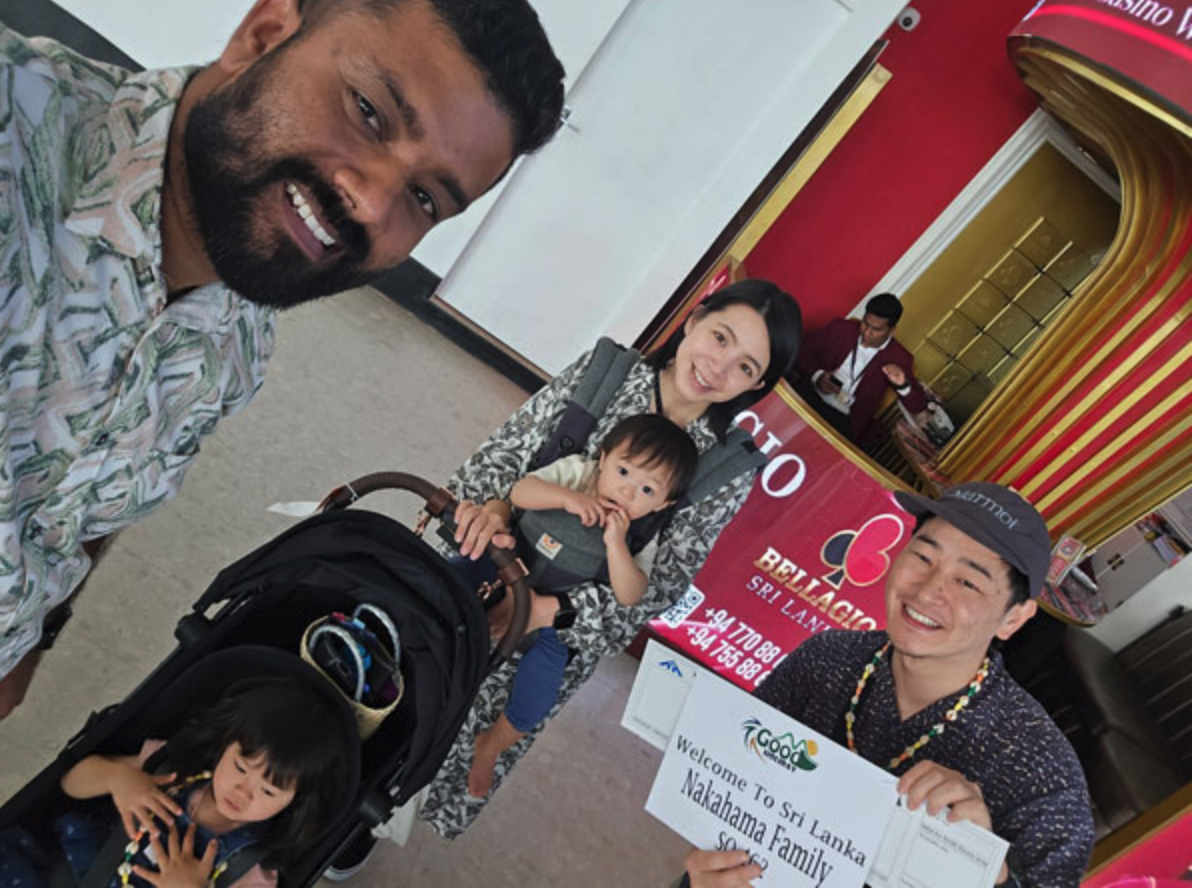
Agree on a precise meeting description: terminal area, sign wording, messaging method and procedure if the flight is delayed. Avoid publishing your full name unnecessarily on a public pickup sign. A first name and private phone confirmation may be more appropriate.
If the provider sends a substitute, pause. Request the replacement’s name, photograph, phone and vehicle details through the original verified contact—not only from the person standing in front of you. You are allowed to remain inside the staffed arrivals area until the change is confirmed.
Share a useful safety packet, not a constant surveillance feed
Give one trusted person the itinerary, hotel list, provider details, assigned driver’s identity, vehicle details, flight information and expected check-in times. Agree on a simple routine, such as a message after airport pickup and another after each intercity arrival.
Live location sharing can be useful during long transfers, but it should supplement—not replace—scheduled check-ins. Keep a power bank, mobile data and offline copies of essential numbers. Save the provider’s office, hotel reception, travel insurer and relevant emergency contacts separately from the messaging app used with the driver.
Do not share more publicly than necessary. Posting the live hotel, room, complete route or the fact that you are alone can undermine the privacy you are trying to create. Share specific details with selected people and post travel memories later.
Prefer daylight for first meetings and difficult roads
UK government travel advice notes frequent road accidents in Sri Lanka, particularly at night, and occasional reports of harassment involving women using taxis or tuk-tuks after dark. A private driver does not remove the road risk, so use daylight as a planning tool where possible.
After a late flight, consider a first night near the airport rather than adding a long drive to Sigiriya, Kandy or the south coast. Schedule winding hill roads and unfamiliar rural arrivals during daylight. Avoid building a day that requires the same driver to start before dawn and continue late into the evening.
When a late arrival is unavoidable, choose a staffed hotel, confirm that reception will be open and ask for door-to-door drop-off in a well-lit entrance. Send the expected arrival time to the hotel and your trusted contact.

Check the vehicle and the driving standard
Request current photographs of the actual or equivalent vehicle. Confirm working seat belts for every passenger seat, rear air conditioning, luggage space, door locks and whether your bags can remain concealed. The quote should identify what happens if the promised vehicle is replaced.
At pickup, use the rear seat and wear the belt. Essential belongings should remain within reach rather than in the trunk. If the driving feels too fast, the driver uses a phone while moving, appears exhausted or the vehicle seems unsafe, say so directly. A professional provider should treat a request for safer driving as a service issue, not a personal insult.
Do not wait for a dangerous pattern to become undeniable. Ask to stop at a hotel, restaurant, fuel station or other staffed public place. Contact the provider’s office and arrange an alternative. The inconvenience of changing transport is less important than continuing in a situation you do not accept.
Make the quotation part of your safety plan
Ambiguous money creates avoidable pressure on the road. The quotation should show the exact route, vehicle category, fuel, expressway tolls, parking, waiting, daily time or distance limits, driver meals and accommodation, airport or night supplements, overtime, route changes, deposit, balance payment and cancellation terms.
Confirm who can approve extra costs and how the revised price will be recorded. Do not rely on “we will decide later” for major items. Keep enough independent funds and a separate payment method to book a hotel transfer or another vehicle if plans change.
A large deposit to an unrelated personal account, pressure to pay before receiving terms, refusal to provide a receipt or unexplained changes in beneficiary details should pause the booking. Verify payment instructions through the contact channel you originally checked.
Plan the route to reduce vulnerable moments
A calm itinerary reduces the number of decisions made while tired, alone or in an unfamiliar place. Choose two- or three-night bases, avoid arriving at a new hotel after reception closes, and leave margin around flights, reserved trains and safaris. Keep the address and telephone number of every hotel offline.
For a scenic train sector, decide who carries the main luggage, where the driver will meet you and what happens if the train is delayed or cancelled. For a safari, remember that the park jeep and the intercity car are usually separate services. Receive the jeep operator, pickup time and vehicle arrangement in writing rather than relying on an informal handover before dawn.
Include independent time without the driver. A private-driver booking does not mean the driver must accompany you to every meal, walk or attraction. Agree on a reunion time and public meeting point, and keep the hotel’s contact details with you.
A 14-point private-driver vetting checklist
- Check the business identity. Record the trading name, website, phone, email and accountable backup contact.
- Read recent independent reviews. Look for journeys similar to yours and repeated details rather than rating alone.
- Request the assigned driver’s identity. Obtain the full name, recent photograph and telephone number.
- Ask for current credentials. Check tourism registration or guide status where the service claims it.
- Confirm the exact pickup process. Write down the meeting point, sign, phone method and delay procedure.
- Überprüfen Sie das Fahrzeug. Request its make, colour, registration details, current photos, belts, air conditioning and luggage plan.
- Test communication. Ask the driver or provider to repeat your route and identify the longest day.
- State boundaries in writing. Include daylight arrivals, no unwanted shops, hotel-door drop-off and freedom to decline suggestions.
- Clarify the complete price. List tolls, parking, waiting, overtime, driver overnight costs, changes and cancellation.
- Protect essential documents. Keep your passport, phone, cards, cash and room access under your control.
- Share a trip packet. Send one trusted person the itinerary, hotels, driver, vehicle and planned check-ins.
- Save alternatives. Keep hotel, insurer, provider, emergency and replacement-transport contacts offline.
- Recheck substitutions. Verify any replacement driver or car through the original provider before leaving.
- Act on discomfort early. Move to a staffed public place, contact support and change transport when needed.
Copy-and-send enquiry template
Hello,

I am travelling solo in Sri Lanka and would like a written private-driver quotation.

Travel dates: [dates]
Route and overnight hotels: [list]
Flights, trains, safaris and fixed bookings: [details]
Luggage: [details]
Preferred latest hotel arrival: [time]

Please confirm:
1. Your business name and office or backup contact
2. Assigned driver's full name, recent photograph and phone number
3. Driver's current tourism registration or guide credentials, where applicable
4. Vehicle make, colour, registration details, current photos and seat belts
5. Exact airport or hotel meeting point and flight-delay procedure
6. Realistic driving time for each day and any night driving
7. Fuel, tolls, parking, waiting, overtime and driver overnight costs
8. Procedure and price if I shorten a day or change the route
9. Whether I can decline unscheduled shops, restaurants and activities
10. Replacement procedure if the assigned driver or vehicle changes
11. Deposit, balance payment, receipt and cancellation terms

I prefer daylight arrivals where possible and direct drop-off at the reception entrance of each booked hotel. Please reply in writing so I can share the confirmed details with my emergency contact.

Thank you.
Where LankaMe fits into the comparison
For a solo woman planning several Sri Lankan regions, LankaMe is one service to include in the comparison. Its English-language consultation and ability to discuss a qualified driver, route, vehicle and supporting arrangements together may be useful when you want fewer informal handovers.
Do not skip verification because a service offers consultation. Ask for the assigned person’s details, confirm the exact inclusions and keep your own backup plan. Our unabhängige LankaMe und privater Reiseleiter für Sri Lanka explains the available planning support, the option of guide-qualified drivers and the checks to complete before booking.
Ready to compare a verified multi-day driver option?
Use our independent LankaMe guide to understand the consultation, driver matching and total-trip support before requesting a written quotation.
- UK government: Sri Lanka safety, transport and advice for women travellers
- UK government: Sri Lanka emergency and Tourist Police contacts
- Sri Lanka Tourism Development Authority: Registrierungsinformationen für Touristenfahrer und -guides
- Sri Lanka Tourism Development Authority: online licensing service
- Sri Lanka Tourism: Verzeichnis autorisierter Touristenfahrer
- Sri Lanka Tourism: Verzeichnis der Chauffeur-Reiseleiter
If something feels wrong during the trip
Start with the lowest-risk action that increases your control. Ask to stop at a busy hotel, restaurant, shop or fuel station. Take your passport, phone, money and essential bag with you. Message your trusted contact and the provider’s backup number from the staffed location.
If you believe you are in immediate danger, contact local emergency services or Tourist Police and seek help from hotel staff or another responsible public-facing business. Current official contact details should be checked shortly before travel and saved offline. Your insurer or embassy may also provide guidance after a serious incident.
You do not need to prove misconduct before ending a service. A mismatch in identity, unexplained vehicle change, unsafe driving, pressure around money, disregard for boundaries or refusal to follow the written route is enough reason to pause and reassess.
Das Fazit
A private driver can make solo travel across Sri Lanka easier by reducing handovers, protecting luggage and creating predictable hotel-to-hotel journeys. The strongest arrangement is not based on trust alone. It is built from a traceable business, an identified driver, appropriate credentials, a roadworthy vehicle, a realistic itinerary, written boundaries and a backup contact.
Complete those checks before paying. Match the arriving person and vehicle to the approved details, share a practical trip packet with someone you trust and use daylight to simplify first meetings and difficult roads. Good planning does not remove every risk, but it gives you more information, more options and more control over the journey.
Safety conditions, official listings, emergency numbers and provider arrangements can change. This article is general travel-planning information and does not guarantee safety. Review current official travel advice, verify driver and vehicle details directly, and maintain travel insurance and an independent emergency plan.




 English
  German
  Chinese
  French
  Italian
  Spanish
  Dutch
Dutch  Malay
Malay  Thai
Thai