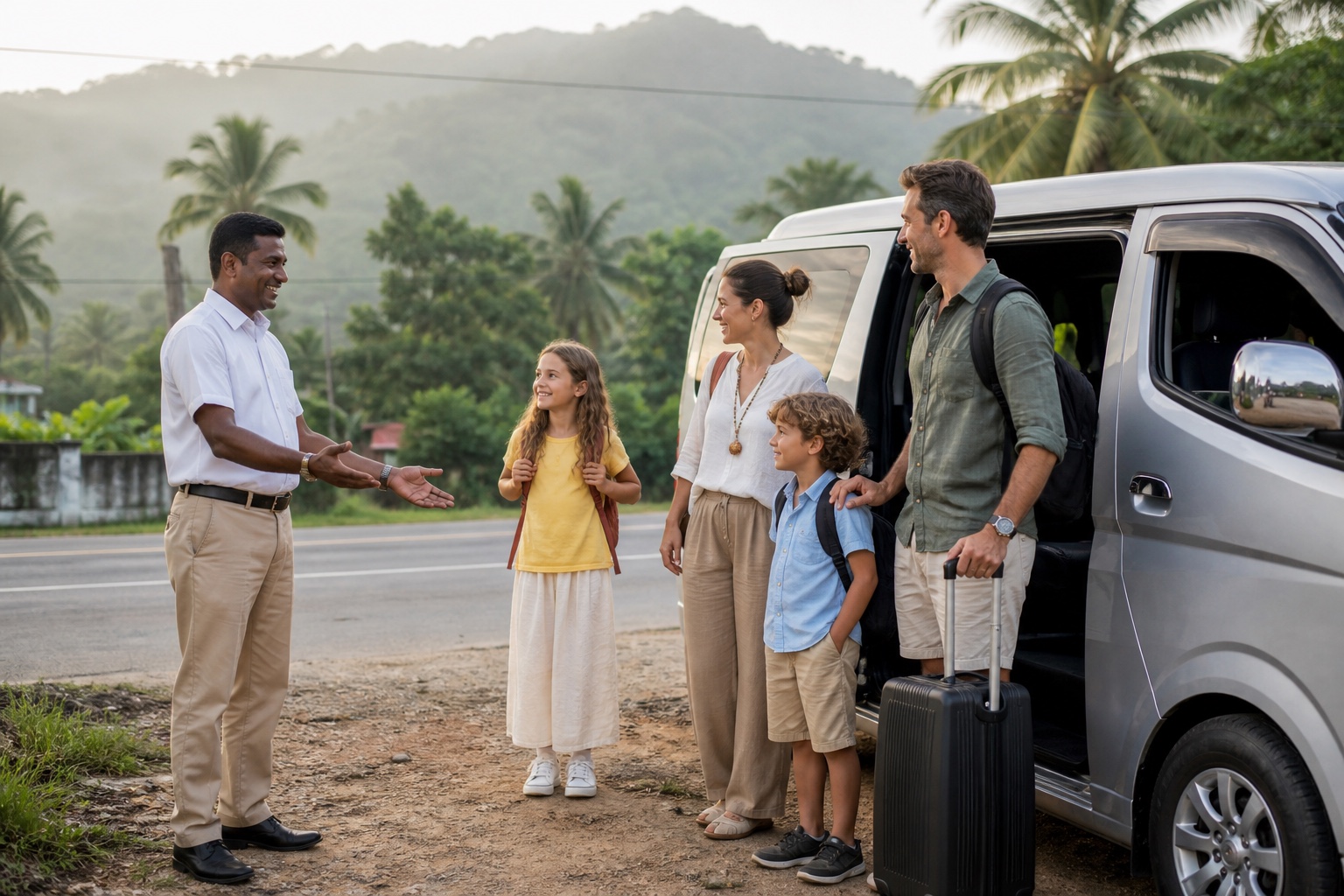
Plan the road days around your children
A private driver can make a family circuit easier—but only when the vehicle, seats and daily pace are right.
Use this guide to compare child-seat arrangements, luggage capacity, realistic travel days and flexible route support before you choose a Sri Lanka driver service.
- Child-seat questions
- Strollers and luggage
- Rest-friendly itineraries
Travelling around Sri Lanka with children is not difficult simply because the country is large. The challenge is that many popular family routes combine hotel changes, warm weather, winding hill roads, luggage, early starts and attractions that operate on fixed schedules.
A private driver can remove several layers of friction. The same vehicle can collect the family at the airport, carry the stroller and suitcases between hotels, wait through a snack break and adapt when a child needs an earlier return. That continuity is valuable—but it does not automatically make every private-car offer safe, comfortable or good value.
When a private driver genuinely makes family travel easier
The practical advantage is not luxury; it is continuity. Parents can keep water, spare clothes, medicine and entertainment in known places. The driver learns how long the group needs for loading, which child becomes carsick and when a toilet or food stop is more useful than another attraction.
Continuity also makes small route changes easier to explain. A family may leave a temple earlier because of heat, delay a departure after a poor night’s sleep or skip a viewpoint when rain closes in. One driver who has the full hotel list and next-day plan can help reorganise the road section without rebuilding the entire booking.
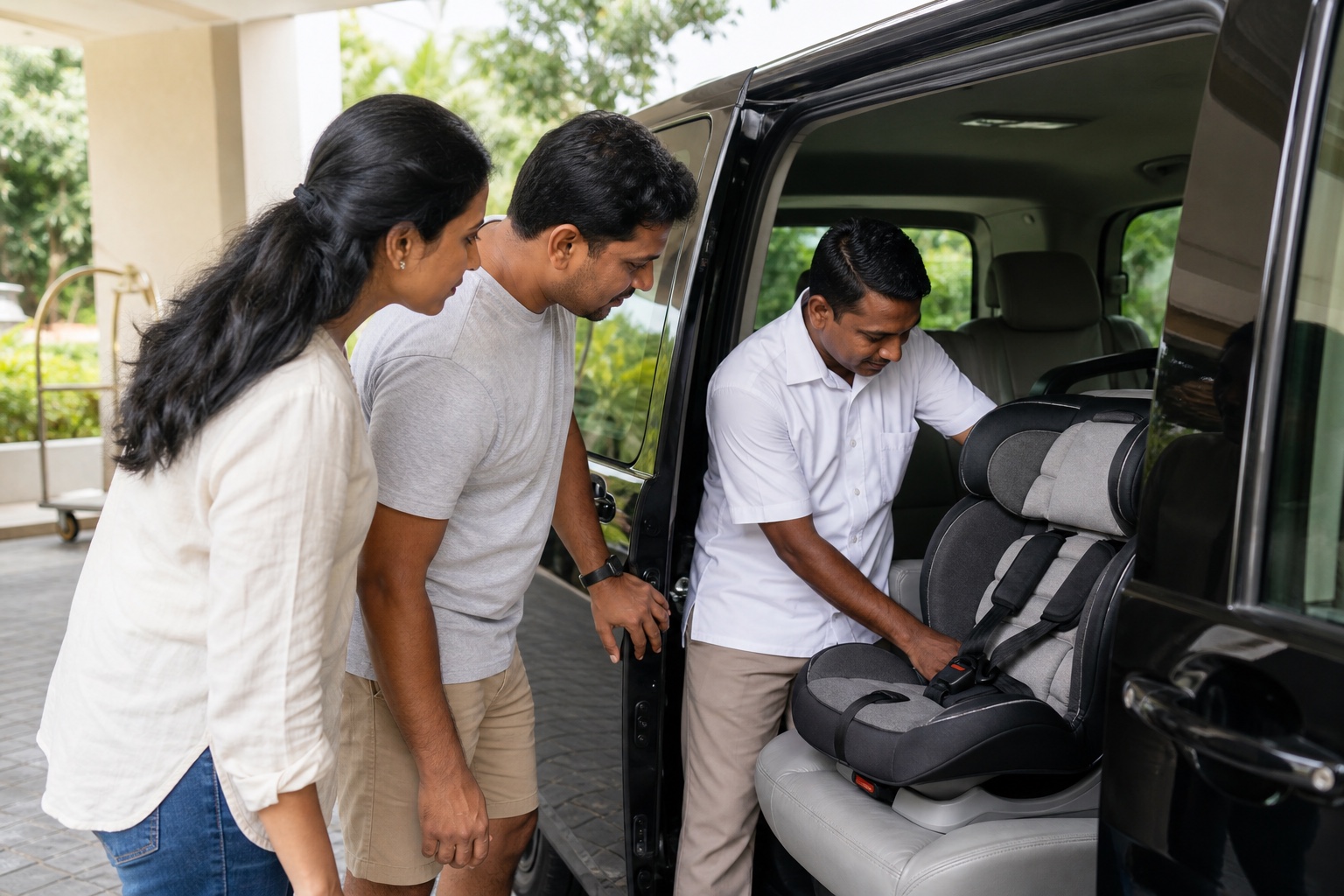
Child seats: confirm the details, not just the word “available”
The latest World Health Organization country profile for Sri Lanka reports a national child-restraint law and says children should not be seated in the front, but it also records no stated age or height threshold and no referenced restraint standard in the reviewed legislation. That makes practical verification especially important for visiting families.
The US Centers for Disease Control and Prevention advises that children should use a car seat, booster or seat belt appropriate to their age, height and weight, and notes that well-maintained approved seats can be limited in some destinations. Families should therefore decide whether to request a provider-supplied seat or bring a familiar seat from home after checking airline, vehicle and compatibility requirements.
Do not accept “baby seat included” as the complete answer. Send the child’s age, height and weight. Ask for the seat’s brand and model, a current photo, whether it is rear-facing or forward-facing, the installation method and which rear seat it will occupy. Confirm that the vehicle has the necessary anchorage or belt arrangement and that the restraint will remain with your car throughout the booking.
Choose the vehicle from the full family load
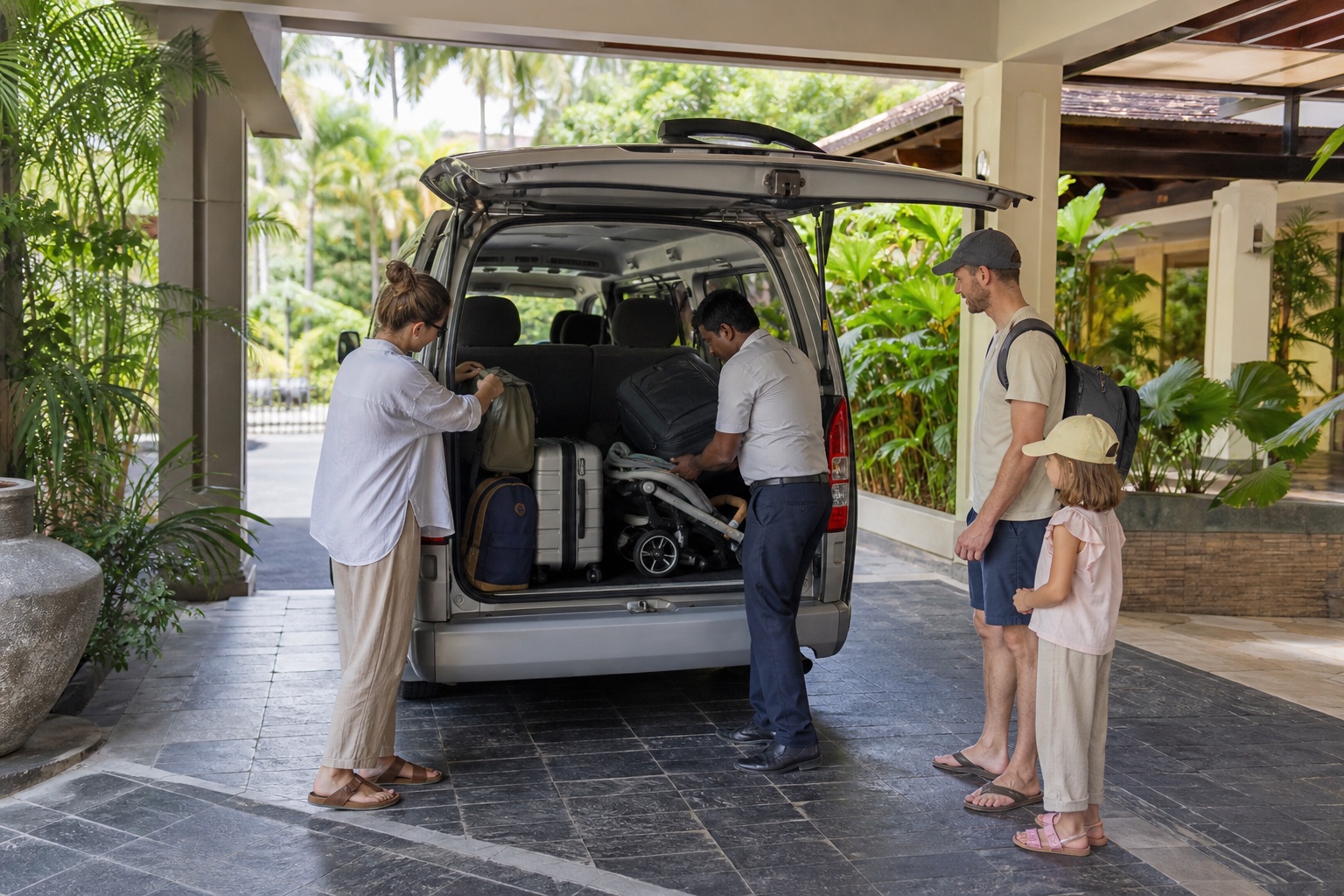
A vehicle described as suitable for five passengers may not be suitable for two adults, two children, a child seat, four large cases, cabin bags and a folded stroller. Child restraints can also reduce the usable width of a rear bench, while luggage piled above the seat line can interfere with visibility and become a hazard.
Send one photograph showing all luggage before the quote is final. Count suitcases, backpacks, stroller, portable cot, child seat and any sports or medical equipment. Ask whether bags will remain inside a closed luggage area and whether every occupied seat retains an accessible seat belt.
For a longer circuit, a slightly larger van can be more comfortable than a tightly packed car. However, “bigger” is not enough: ask about air conditioning in the rear rows, step height, door access, window shades and whether adults can reach a younger child without unbuckling while the vehicle is moving.
Plan shorter road days than an adults-only itinerary
Map distance can be misleading in Sri Lanka. Urban traffic, winding hill-country roads, roadside activity and breaks can make a modest distance a substantial travel day. Children also add time for snacks, toilets, motion-sickness recovery and simply getting in and out of the vehicle.
Build the itinerary around one major transfer or one major experience on most days, not both at full intensity. A morning temple visit followed by a moderate drive may work well; a long transfer, wildlife safari, late hotel arrival and pre-dawn start the next morning rarely does.
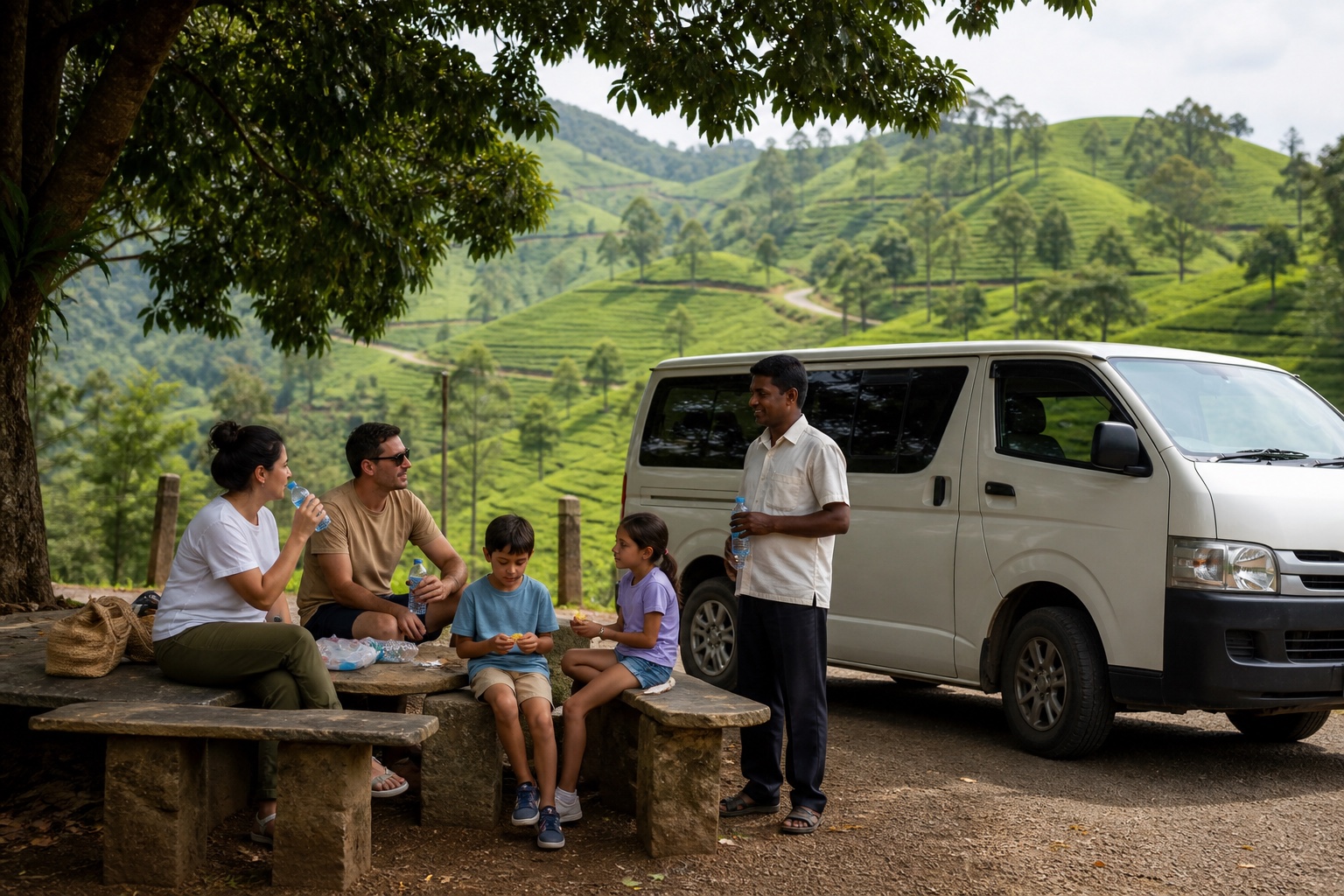
Agree that the driver will stop when the family needs a safe break. Children are more vulnerable to heat-related illness, and the CDC advises frequent fluids, shade and cooler timing for outdoor activity. It also warns never to leave a child unattended in a parked vehicle, even with a window open.
Private car, train, taxi or tuk-tuk: use each where it works
A private driver does not need to replace every other form of transport. A scenic train can still be a memorable family experience. The driver may carry the main luggage to the next hotel while the family takes daypacks on the train, provided the handover, tickets and meeting point are agreed in writing.
Short tuk-tuk rides can be enjoyable for older children on calm local routes, but they do not offer the same restraint, luggage and weather protection as a closed car. Public buses can be inexpensive but may be crowded and fast-moving. UK government travel advice notes frequent road accidents in Sri Lanka, particularly at night, and advises caution around road conditions and driving behaviour.
For a week at one beach hotel, a pre-booked airport transfer plus occasional local transport may be simpler and cheaper than retaining a driver. The private-car option earns its cost when continuity solves repeated logistical problems across a real circuit.
| Family trip pattern | Often easiest | Why |
|---|---|---|
| One resort for most of the holiday | Transfert aéroport et trajets locaux | Continuous vehicle availability adds limited value. |
| Trois villes ou plus avec nuitées sur place | Un chauffeur privé | Known seating, luggage space and fewer handovers. |
| Train experience with large bags | Train plus coordinated driver | The family enjoys the railway while luggage reaches the next hotel. |
| Toddler, stroller and frequent breaks | Private vehicle with verified restraint | The daily pace can adapt without repeated bookings. |
| Simple city stay with light luggage | Selected taxis or hotel transfers | Walking and short rides may cover most needs. |
Three family-friendly route shapes
Use two- or three-night bases, avoid stacking long drives with major climbs and add an easy arrival night.
Carry only daypacks on the train and confirm where the driver, child seat and main luggage will meet the family.
Use a continuous driver only for touring days; a pair of transfers may be enough for a mostly stationary stay.
Two nights in each major base is often kinder than moving every morning. With younger children, consider three nights where the itinerary includes a demanding climb, safari or beach day. A spare half-day gives the family room for illness, weather or simple fatigue without losing the next hotel booking.
Flexibility needs written boundaries
Families often choose a private driver because plans can change. A child may wake with a fever, rain may make an outdoor stop unattractive or a long lunch may become the best part of the day. Flexibility is useful only when both sides understand what can change without creating a surprise charge or an unsafe driving day.
Ask how route changes are approved, how additional distance or hours are calculated and who provides support if the assigned driver cannot continue. Confirm whether unused kilometres or skipped attractions change the price. A professional provider should record the revised plan in writing rather than relying on an unclear roadside conversation.
Flexibility does not mean asking a tired driver to add a late-night transfer after a full day. Protect daily rest for the driver as well as the family. If a change creates an unreasonable schedule, the correct response may be another night in the same hotel.
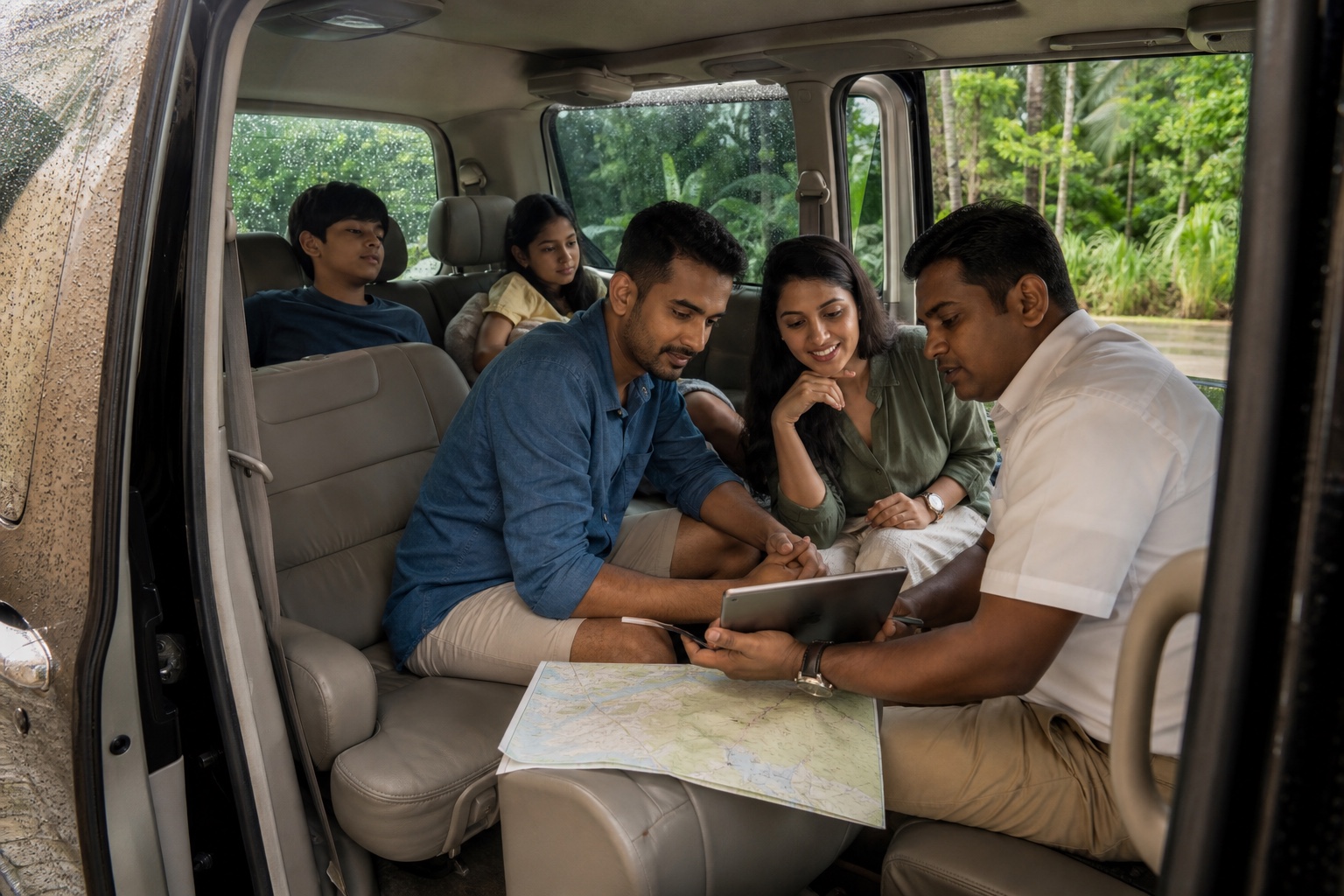
A 12-point family booking checklist
- List every traveller’s age. Include each child’s height and weight when requesting a restraint.
- Name the seat type. Confirm rear- or forward-facing seat, booster or standard belt as appropriate.
- Request current photographs. Ask for the restraint, rear seat and belt or anchorage arrangement.
- Count all luggage. Include stroller, cot, day bags, child seat and unusual equipment.
- Confirm the exact vehicle. Request the model or equivalent, passenger layout and luggage plan.
- Vérifier la climatisation arrière. Ask whether every row receives effective cooling.
- Set a daily pace. Give preferred departure times, maximum road hours and break expectations.
- Identify fixed bookings. Share flights, trains, safaris and hotel check-in constraints.
- Plan motion sickness. Mention winding-road sensitivity and keep medicine accessible.
- Vérifier le conducteur assigné. Obtain the full name and tourism registration details where applicable.
- Define changes and overtime. Put extra-hour, distance and route-change rules in writing.
- Gardez un contact de secours. Know who responds if the vehicle, seat or driver differs at pickup.
Verify the driver and compare the complete quote
Sri Lanka Tourism maintains a searchable public directory of authorised Tourist Drivers. Ask for the assigned driver’s name or registration number and compare it with the official listing. If your family needs formal guiding and interpretation at heritage sites, ask whether a licensed Chauffeur Tourist Guide is more appropriate than a transport-focused Tourist Driver.
The quotation should name the vehicle and show fuel, expressway tolls, parking, waiting, daily time or distance limits, driver meals and accommodation, child-seat fee, airport or late-night supplements, overtime, route changes, deposit, balance payment and cancellation terms.
Compare offers using the same family details and route. A lower quote may exclude a larger vehicle, a suitable restraint, driver overnights or waiting time. The useful number is the expected total for the safe service you actually need.
Copy-and-send family driver enquiry
Hello,

We are planning a family trip in Sri Lanka and would like a private-driver quote.

Travel dates: [dates]
Adults: [number]
Children: [ages, heights and weights]
Route and overnight hotels: [list]
Airport / train / safari bookings: [details]
Luggage: [large cases, cabin bags, stroller, cot and other items]
Preferred daily pace: [details]

Please confirm:
1. Exact vehicle or equivalent and seating layout
2. Child-restraint type, model, installation method and current photo
3. Working seat belt for every occupied seat
4. Luggage and stroller capacity with all passengers seated
5. Rear air conditioning and window shades
6. Assigned driver's full name and tourism registration details
7. Planned driving hours, breaks and driver rest
8. Fuel, tolls, parking, waiting and driver overnights
9. Child-seat, late-night, overtime and route-change charges
10. Backup contact, payment schedule and cancellation terms

Thank you.
Where LankaMe fits into a family booking
For families planning a multi-city circuit, LankaMe is one service to include in the comparison. Its English-language consultation may be useful when the vehicle, luggage, child seating, route pace and driver category need to be discussed together before a quotation is prepared.
A platform does not replace verification. Confirm the exact restraint, vehicle and assigned driver before payment and check them again at pickup. Our LankaMe indépendant et guide-chauffeur privé au Sri Lanka explique comment fonctionne le service, à qui il peut convenir et ce qu'il faut vérifier avant de réserver.
Need a vehicle that fits the children and every bag?
Use our independent LankaMe guide to understand the consultation, driver matching and written-quote process before you compare family transport options.
- World Health Organization: Sri Lanka road-safety country profile
- CDC Yellow Book: travelling safely with infants and children
- CDC: infants, children and heat
- Tourisme au Sri Lanka : répertoire des chauffeurs touristiques agréés
- Tourisme au Sri Lanka : Répertoire des guides-chauffeurs touristiques
- Gouvernement du Royaume-Uni : Conseils sur la sécurité et les voyages routiers au Sri Lanka
En fin de compte
A private driver is often the easiest way for a family to connect several Sri Lankan regions, but the value comes from a suitable vehicle, reliable restraints, sensible road days and clear communication—not merely from having a car available.
Send the children’s measurements and the complete luggage list before comparing quotes. Verify the driver and child-seat arrangement, plan breaks before they are needed and leave room for weather, fatigue and changed priorities. When those details are right, a private vehicle can give children a steadier rhythm and give parents more energy for the journey itself.
Road-safety rules, official listings, provider fleets and child-seat availability can change. Confirm current legal requirements and the specific vehicle and restraint with official sources and your chosen provider before travel and payment.




 English
  German
  Chinese
  French
  Italian
  Spanish
  Dutch
Dutch  Malay
Malay  Thai
Thai