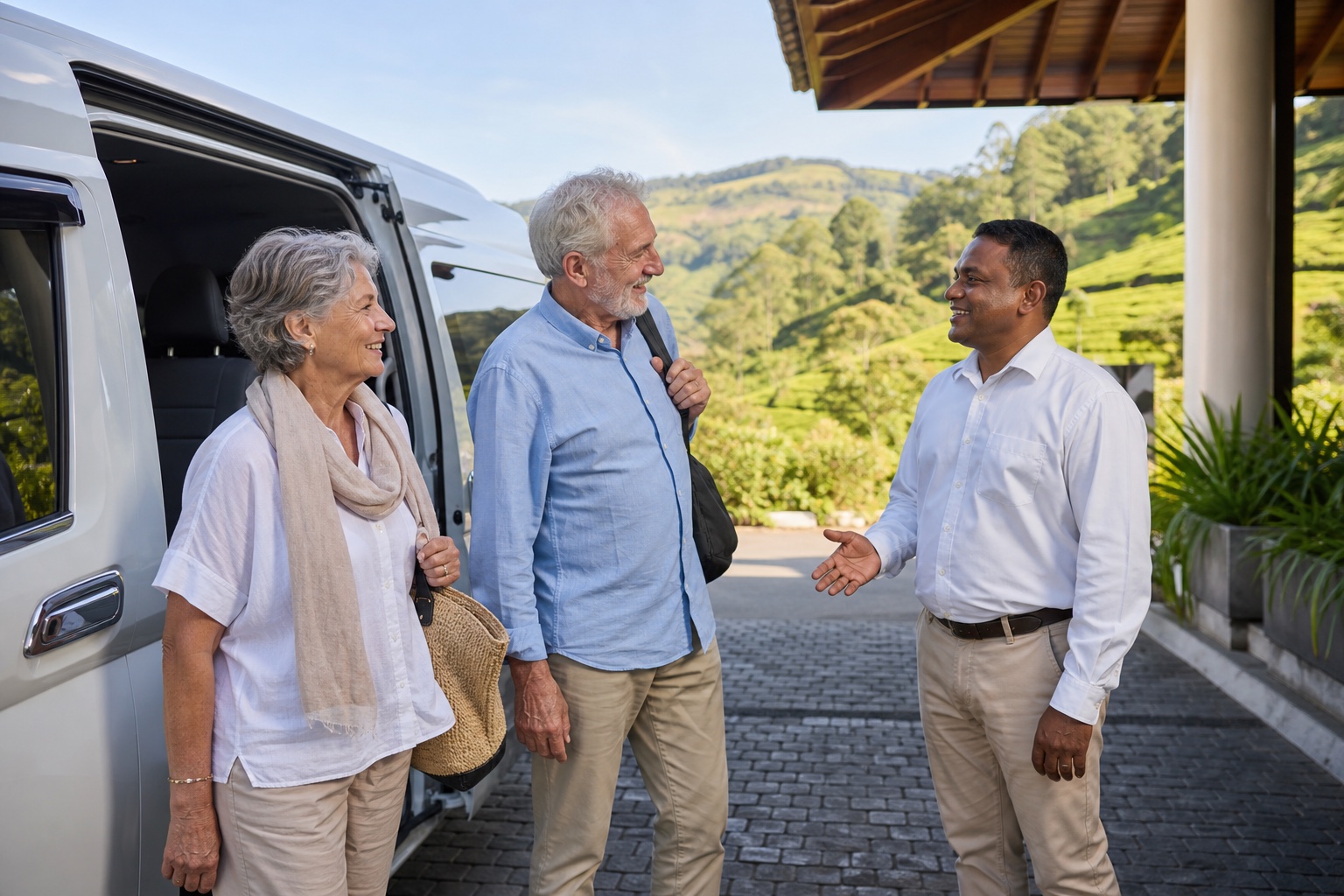
Comfort starts with the right questions
Choose the vehicle, driver and daily pace around the traveller—not a standard tour schedule.
Use this practical guide to compare boarding access, luggage and mobility-aid space, road hours, rest breaks and English-language support before booking a Sri Lanka driver service.
- Easy vehicle access
- Unhurried road days
- Clear written support
Sri Lanka can be a rewarding destination for older travellers because its historic cities, wildlife areas, tea country and coast can be combined in one journey. The harder part is not deciding what to see. It is turning those places into a route that respects comfortable boarding, realistic road hours, heat, steps, medication schedules and the need for an occasional quiet afternoon.
A private driver can reduce repeated transfers and give the journey a steady rhythm. The same vehicle can meet the flight, carry suitcases and a folded walking aid, wait through a longer lunch and return to the hotel when the group has had enough. That continuity is useful, but it does not make every driver or vehicle suitable for senior travel.
When a private driver adds real value
The principal advantage is continuity rather than luxury. Water, medicine, a light jacket, walking aids and day bags can stay in known places. The driver learns how long the travellers need at each stop and whether a clean toilet, shade or a shorter walk is more useful than adding another attraction.
A retained vehicle is less necessary for a week in one resort, a Colombo stay or a trip made almost entirely by train. In those cases, an airport transfer and selected local rides may be sufficient. The private-driver option earns its cost when it solves a sequence of practical problems across a genuine island circuit.
Choose the vehicle from the boarding process
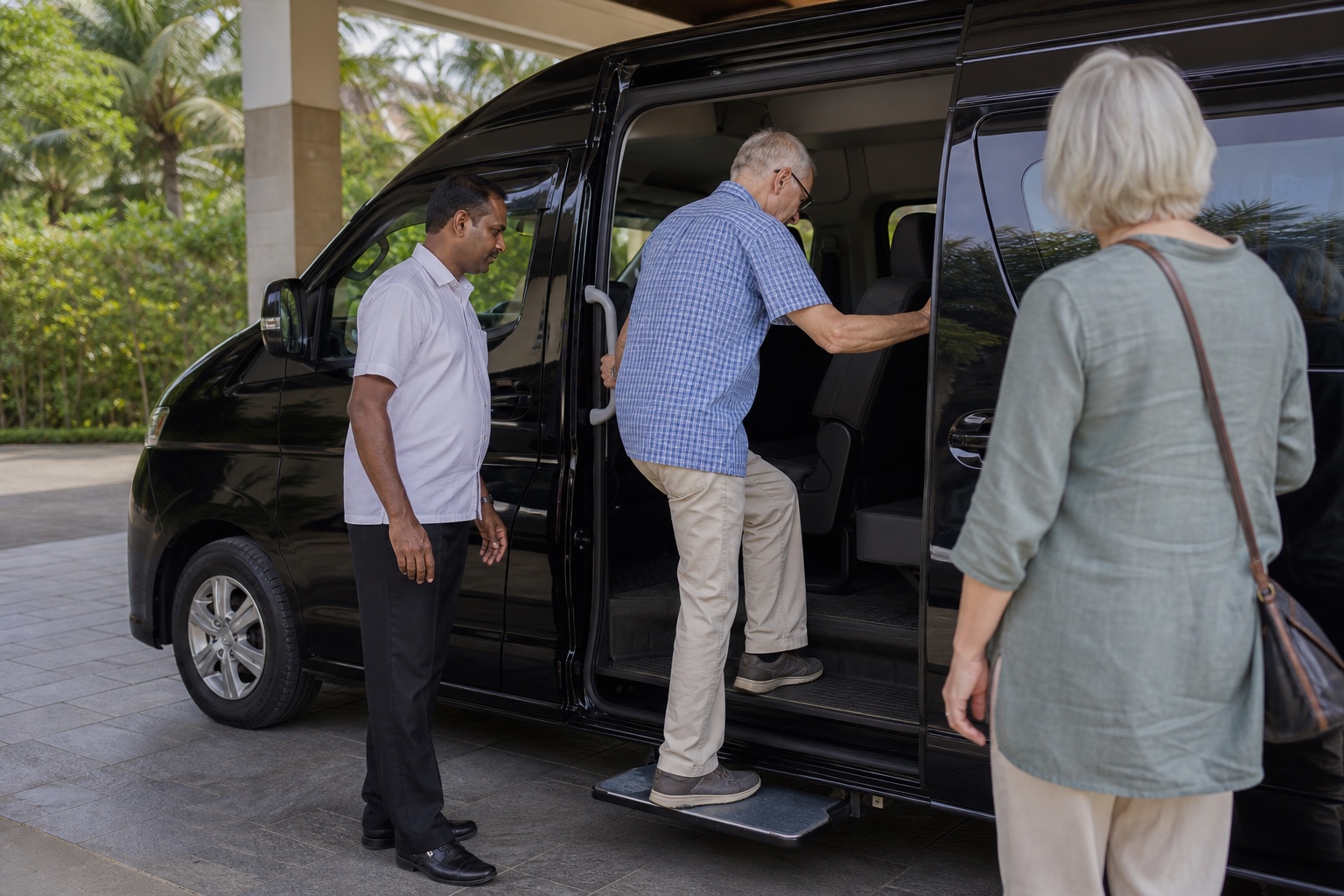
Vehicle size is not the same as accessibility. A high-roof van may have more luggage room yet require a taller first step. A low car may be easy to step into but difficult to rise from. Ask for current photographs or a short video showing the complete door opening, floor height, intermediate step, grab handle and the seat the traveller will use.
Confirm whether the front passenger seat is available, whether its height and legroom are suitable, and whether every occupied seat has a working three-point belt. For a van, ask whether rear passengers receive effective air conditioning. The most comfortable seat is not useful if a traveller cannot reach it safely or if the aisle is blocked by bags.
Describe the level of assistance honestly. A driver can allow time, place luggage and stand nearby, but should not be assumed to provide trained lifting or personal care. If hands-on assistance is required, arrange an appropriate companion or specialist service and tell every provider what is expected before payment.
Make every bag and mobility aid part of the quote
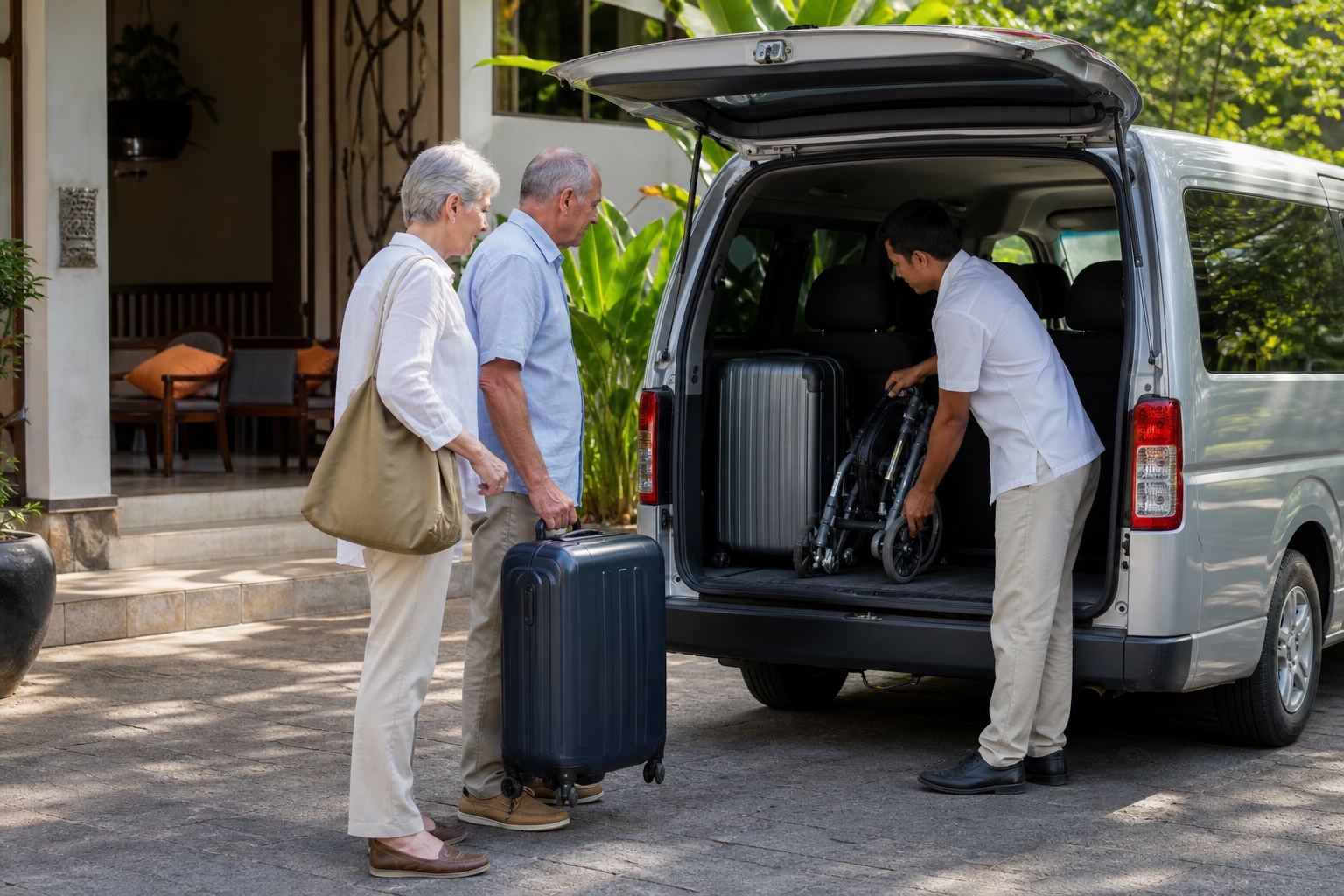
A quotation based on passenger count can fail when the vehicle arrives. Two travellers may also have two large cases, cabin bags, a walking frame, a folding wheelchair and a day bag that must remain within reach. The equipment should fit inside a closed luggage area without occupying a passenger seat or blocking an exit.
Send one photograph of all luggage and give the folded length, width and height of any mobility aid. Ask how it will be secured and whether it can be removed without unloading every suitcase. If a wheelchair must stay accessible for short stops, say so explicitly.
Keep medicine, prescriptions, water and essential personal items in a separate day bag that remains with the traveller. The US Centers for Disease Control and Prevention advises people with chronic conditions to carry a health summary and enough medication for the trip plus possible delays. It also recommends checking whether medicines are restricted at the destination and keeping them in original labelled containers.
Plan shorter road days and fewer hotel changes
Distance on a map can underestimate the effort of a Sri Lankan road day. Urban congestion, winding hill roads, roadside activity, weather and slow approaches to hotels can turn a modest distance into several hours in the vehicle. UK government travel advice notes poor road conditions in remote areas, erratic driving and frequent accidents, particularly at night.
Build most days around one substantial transfer or one substantial experience, not both at maximum intensity. Two or three nights in important bases reduce packing and make it possible to choose a quiet morning after a long drive. Where possible, arrive before dark and avoid asking the same driver to combine an early start with an added late-night sector.
Tell the provider a preferred maximum number of road hours per day. The number should exclude sightseeing time and include realistic breaks. If the traveller tires easily, divide a long route with a second base instead of relying on a promise that the driver will “go slowly.”
| Corak perjalanan | Often more comfortable | Sebab |
|---|---|---|
| One beach or wellness base | Airport transfer plus selected local rides | A retained vehicle adds limited value when most days begin and end at one hotel. |
| Cultural Triangle, Kandy and coast | One driver with two- or three-night bases | Fewer handovers, known boarding access and one complete luggage plan. |
| Scenic train with large luggage | Train segment plus coordinated driver | The driver can move the main bags and meet the travellers at a defined station. |
| Mobility aid and frequent breaks | Verified private van with written brief | The vehicle and daily timing can be chosen around actual access needs. |
| Short Colombo stay | Hotel transfers and carefully selected taxis | There may be no need to pay for continuous touring support. |
Use heat, hydration and rest as route-planning facts
Older adults are more vulnerable to heat because the body may not adjust as efficiently to sudden temperature changes, and some medicines or health conditions can affect temperature control. The CDC recommends staying hydrated, using air-conditioned environments when needed, and discussing the effect of heat with a healthcare provider.
That advice should change the itinerary. Schedule exposed walks and major climbs for cooler morning hours. Keep the vehicle cool before boarding, carry drinking water and place a shaded, clean-toilet stop into longer drives. Do not wait for someone to feel unwell before allowing a break.
A private driver is not a medical professional. Travellers with chronic conditions should discuss their own fitness to travel, medication timing and emergency plan with a qualified clinician before departure. Share only the practical information the driver needs, such as the need for regular stops, easy access to the day bag or prompt transport to a healthcare facility.
Ask about the walking surface, not only the attraction name
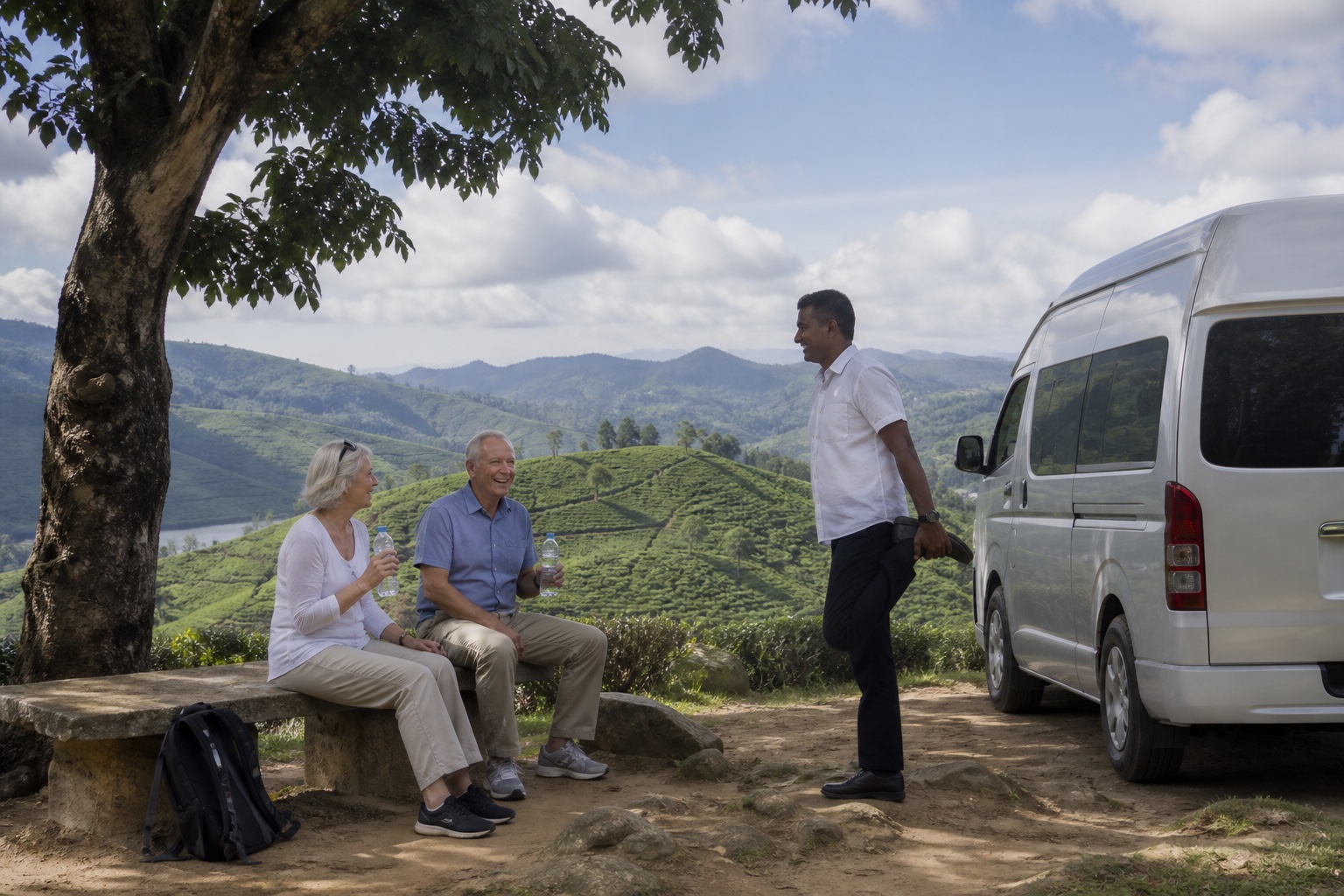
“Visiting Kandy,” “seeing Sigiriya” or “touring a tea estate” does not describe the physical demand. Ask about the distance from the vehicle, stairs, handrails, uneven stone, slopes, heat exposure, seating, toilets and whether the vehicle can collect the group at a different exit.
A driver who knows the route should be willing to identify a long approach or difficult set of steps before the day begins. Ask for a lower-effort alternative: a viewpoint instead of a climb, a shorter heritage circuit, a garden or museum visit, or a relaxed lunch while another member of the group completes the demanding section.
Do not treat a mobility limitation as a reason to remove every experience. Divide the group when useful and agree on a precise reunion point. A successful itinerary gives each traveller agency instead of forcing everyone through the same physical programme.
Combine a private car with trains carefully
A scenic train can remain part of an older traveller’s itinerary. The private driver may carry large luggage to the next hotel while the travellers use day bags, provided tickets, boarding station, carriage, arrival platform and reunion plan are confirmed. Reserve seats where possible and allow time to board without rushing.
UK travel advice warns passengers to stay inside the carriage while trains are moving and notes that rail services can be affected by weather. Ask the driver or booking contact what happens if the train is cancelled, delayed or too crowded. The fallback should be agreed before the driver leaves with the luggage.
If boarding, toilets or platform access are uncertain, a private-car sector may be the more comfortable choice. The goal is not to complete every famous transport experience; it is to create a journey that the traveller can enjoy without using the next day to recover.
Three gentle route shapes to discuss
Use two- or three-night bases, choose one principal activity per day and include a calm arrival night near the airport or first hotel.
Break up winding roads, use a reserved train only where practical and keep a private-car fallback for weather or fatigue.
Reduce packing and choose Galle, gardens, beaches or wildlife outings according to energy and heat on the day.
These are route shapes rather than prescriptions. A traveller who walks daily at home may prefer more activity than a younger person recovering from surgery. Start with the individual’s normal comfort, not an age label, and add recovery time after flights, climbs and long road sectors.
English communication and a backup contact matter
A driver does not need perfect conversational English, but the group must be able to communicate urgent needs, hotel names, timing, rest stops and route changes. Before booking, ask a few practical questions by message or short call and check whether the answers are direct rather than copied.
Useful questions include: “Which day of our route looks too long?”, “Where can we stop for a clean toilet?”, “Can this wheelchair fit without removing a passenger seat?” and “Who do we contact if we cannot reach the driver?” A thoughtful answer demonstrates more than a generic claim of senior-friendly service.
Keep the provider’s office or backup contact as well as the assigned driver’s number. Share the hotel list, flight details and essential access requirements in one written itinerary. If the assigned vehicle or driver changes, require the replacement details before travel begins.
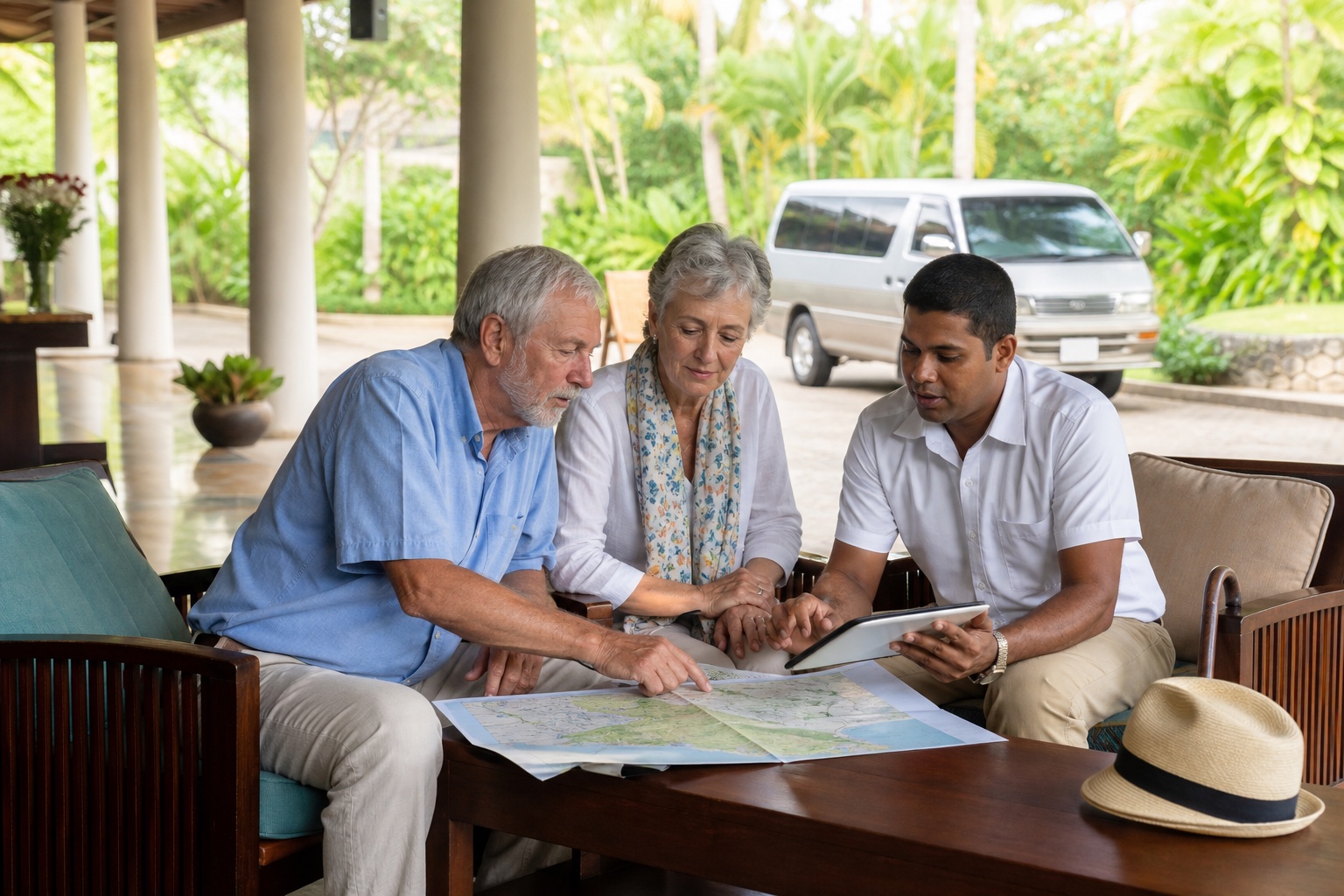
A 12-point senior-travel driver checklist
- Describe mobility accurately. State comfortable walking distance, stairs, balance concerns and whether assistance is required.
- Send equipment dimensions. Include the folded size and weight of every wheelchair, rollator or walking frame.
- Request current vehicle photographs. Check the full door opening, step, grab handle, seat height and legroom.
- Confirm a working belt for every seat. Do not accept luggage or equipment blocking an occupied seat or exit.
- Count every bag. Show suitcases, cabin bags, medical equipment and day bags together.
- Check rear air conditioning. Ask which rows receive cooling and whether the vehicle can be cooled before boarding.
- Set maximum daily road hours. Define preferred starts, finish times and the frequency of rest or toilet breaks.
- Identify demanding attractions. Ask about parking distance, stairs, slopes, surfaces, shade, seating and alternatives.
- Keep essentials accessible. Medicine, prescriptions, water and emergency information should remain with the traveller.
- Verify the assigned driver. Request the full name and tourism registration details where applicable.
- Put inclusions and changes in writing. Confirm tolls, parking, waiting, overtime, driver overnight costs and route-change rules.
- Keep a backup plan. Record the office contact and response if the vehicle, driver or train connection changes.
Verify the driver and compare complete quotations
Sri Lanka Tourism publishes a searchable directory of authorised Tourist Drivers. Ask for the assigned driver’s full name or registration number and compare it with the official listing. If the group needs formal guiding and interpretation inside major heritage sites, ask whether a licensed Chauffeur Tourist Guide is more appropriate than a transport-focused Tourist Driver.
The quotation should identify the vehicle and show fuel, expressway tolls, parking, waiting, daily time or distance limits, driver meals and accommodation, airport or late-night supplements, overtime, route changes, deposit, balance payment and cancellation terms.
Compare providers using the same itinerary, access details, equipment measurements and luggage list. A low price may assume a smaller vehicle, longer road days or exclusions that make the trip less comfortable. The meaningful figure is the expected total for the service actually described.
Copy-and-send enquiry for an older traveller
Hello,

We are planning a Sri Lanka trip and would like a private-driver quotation.

Travel dates: [dates]
Travellers and ages: [details]
Route and overnight hotels: [list]
Flights, trains and fixed bookings: [details]
Preferred daily road hours and break frequency: [details]
Walking and stair comfort: [details]
Mobility aids and folded dimensions: [details]
Luggage: [large cases, cabin bags and other items]

Please confirm:
1. Exact vehicle or equivalent and seating layout
2. Door opening, first step, grab handle, seat height and current photos
3. Working seat belt for every occupied seat
4. Luggage and mobility-aid space with all passengers seated
5. Rear air conditioning and whether the vehicle can be cooled before boarding
6. Assigned driver's full name and tourism registration details
7. Realistic driving hours, rest stops and expected night driving
8. Access considerations and lower-effort alternatives at planned attractions
9. Fuel, tolls, parking, waiting, overtime and driver overnight costs
10. Route-change rules, backup contact, payment schedule and cancellation terms

Thank you.
Where LankaMe fits into senior travel planning
For older travellers or multi-generation groups building a multi-city route, LankaMe is one service to include in the comparison. Its English-language consultation may be useful when vehicle access, luggage, mobility equipment, road hours and lower-effort alternatives need to be discussed together before a quotation is prepared.
A consultation does not replace verification. Confirm the exact vehicle and assigned driver before payment and check the boarding arrangement again at pickup. Our independent LankaMe and Sri Lanka private-driver guide explains how the service works, who it may suit and what to check before booking.
Need a slower route and the right vehicle access?
Use our independent LankaMe guide to understand the consultation, driver matching and written-quote process before comparing senior-travel options.
- Sri Lanka Tourism: authorised Tourist Driver directory
- Sri Lanka Tourism: Chauffeur Tourist Guide directory
- UK government: Sri Lanka safety and road-travel advice
- CDC: heat and older adults
- CDC Yellow Book: travellers with chronic illnesses
- CDC Yellow Book: travel health kits
- CDC Yellow Book: travelling with restricted medicines
- Bandaranaike International Airport: passenger and special-assistance information
Kesimpulan
A private driver can make a Sri Lanka journey substantially more comfortable for older travellers, but only when the vehicle, route and support are chosen from real needs. Age alone tells a provider very little. Step height, seat comfort, walking tolerance, luggage, mobility-aid dimensions, road-hour limits and the desired balance between activity and rest are the useful facts.
Send those details before comparing quotes. Verify the assigned driver, inspect the actual boarding arrangement and protect time for shade, toilets, hydration and changes of plan. When the road days are designed around the traveller, a private vehicle can turn a demanding island circuit into a calm and memorable journey.
Health needs, official listings, road conditions and provider fleets can change. This article is general travel-planning information, not medical advice. Confirm personal fitness and medication questions with a qualified healthcare professional, and verify current transport and assistance arrangements with official sources and the selected provider before travel and payment.




 English
  German
  Chinese
  French
  Italian
  Spanish
  Dutch
Dutch  Malay
Malay  Thai
Thai